
Buying guides
Kitchen storage containers: volume, lids and cupboard fit
Storage containers should fit both their contents and the cupboard where they will live.
Published Information checked
Storage containers should fit both their contents and the cupboard where they will live. Start by listing the foods or other items you want to store and measuring the available shelf space. Volume alone does not tell you whether a container accepts a particular packet, stacks conveniently or has a lid that can be opened in the intended position.
Measure the usable shelf
Record width, depth and the clearance between shelves. Include door hinges or other obstructions that reduce the opening. Compare the container's overall dimensions with its lid attached. A set shown neatly nested may occupy a different amount of space when each container is full. Draw the everyday arrangement rather than assuming the storage photograph represents the way you will use the set.
Match volume with the contents
Use the quantities you actually buy as a reference, while recognising that equal weights of different ingredients occupy different volumes. Avoid treating a litre figure as a universal conversion from package weight. Check the container manufacturer's intended use and any fill guidance. If you want to store a whole unopened packet, compare its physical dimensions instead of assuming the stated food volume resolves that fit.
Count containers and lids separately
A headline piece count can include lids as separate pieces. Write down the number of usable containers and each size. Check which lids fit which bases and whether replacement parts are offered. A mixed set may contain many small containers but too few of the larger sizes needed for your cupboard. Compare the actual size distribution with your list before treating a larger piece count as better value.
Read the use and care instructions
Check whether the product is intended for the proposed contents and any freezer, microwave or dishwasher use. Read restrictions for lids and other components separately. Do not assume every part shares the same care instructions. Joseph Joseph and other kitchenware suppliers offer different systems, so use the exact model information rather than applying a general claim to an entire brand.
A cupboard-order example
Imagine buying a matching set for several dry ingredients. Two large containers fit the shelf, but a third blocks the hinge area. A different combination of sizes may use the cupboard more conveniently than the standard set. Compare an individual-piece basket with the bundle and include the required lids. The goal is an arrangement that can be filled, opened and cleaned comfortably, not simply the most coordinated photograph.
Keep the arrangement repeatable
Save the product range, sizes and lid information if you may add pieces later. Verify future compatibility at the time of any later order rather than assuming it indefinitely. On arrival, check the supplied counts and dimensions before following the first-use care instructions. A useful storage purchase connects package quantities, shelf space and the maintenance routine, with the actual container count clearly separated from marketing piece totals.
Separate the main comparison points
| Record | What it establishes |
|---|---|
| Piece count | Separate usable containers from lids and extras |
| Volume | Compare with the contents you actually plan to store |
| Footprint | Check overall dimensions in the real cupboard |
Your comparison worksheet
Keep one short record for each candidate. Resolve the details below from the current listing or a direct supplier answer before treating the options as equivalent. Leave an uncertain point clearly marked rather than filling it with an assumption.
- Shelf: Actual depth, height and the opening around hinges or obstructions
- Contents: Intended package quantities and the useful physical storage arrangement
- Set: Usable container count distinguished from lids counted as pieces
- Compatibility: Matching lids and bases identified within the selected product system
- Care: Separate use and cleaning instructions for every supplied component
Continue with the retailer information
Explore Joseph Joseph, Lakeland, Robert Dyas. These profiles provide a route to the official shops and their published service information. Use the exact product or order details from your worksheet when following those links, and confirm the current selected option before paying.
For more relevant retailers, browse our home and garden shops directory. Compare businesses that genuinely serve this purchase, keeping differences in products and shopping arrangements visible rather than treating every retailer as interchangeable.
The official source below provides further product or ordering information. Read the details relevant to your selected item, and retain any supplier answer that materially changes the comparison.
Sources and checks
Continue reading
Buying guides
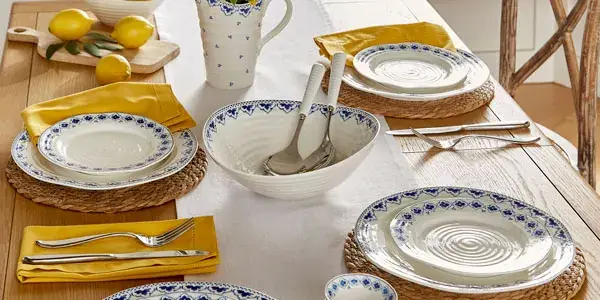
Dinnerware sets: count the pieces you will actually use
A dinnerware set's piece count can hide how many complete places it provides.
Read the guide
Buying guides
Cookware for an induction hob: compare the base and usable size
Cookware for an induction hob needs a confirmed relationship between the hob and the pan base.
Read the guideBuying guides
Wardrobe planning: doors, skirting and usable internal storage
A wardrobe plan should describe the clothes and objects it will hold as well as the space it occupies.
Read the guideEXPLORE THE DIRECTORY
Related shop profiles

Joseph Joseph
Explore Joseph Joseph for kitchen tools, storage and practical home organisation. Check dimensions, item contents, UK delivery and the published return process.

Lakeland
Explore Lakeland for cookware, baking equipment and practical home products. Check dimensions, item contents, UK delivery and the published return process.

Robert Dyas
Explore Robert Dyas for household goods, kitchen electricals, garden products, DIY and gifts. Compare exact specifications and supplier information before checking delivery, collection and returns.