
Buying guides
Substituting yarn: compare metres, tension and fibre
Work out a yarn substitution using project metreage, tension, fibre and care information rather than matching ball weight alone.
Published Information checked
Yarn substitution starts with the project, not the weight of one ball. Two balls can weigh the same and contain different lengths, while a similar thickness label does not guarantee the same finished fabric. Record the original yarn requirements and check both quantity and behaviour before ordering an alternative.
Calculate length before counting balls
Find the total length required by the pattern for the chosen size. Compare metres with metres, converting units consistently if necessary. Then divide by the length supplied in each ball of the proposed yarn and round up to whole balls as appropriate. Keep any project-specific allowance separate so that the arithmetic remains visible rather than hiding it in a guessed ball count.
Use a tension sample
The pattern’s tension requirement is central to the finished measurements. A broad yarn category is only a starting point. Work the sample specified by the pattern and follow its instructions for measuring and preparation. If the sample differs, seek guidance before treating the substitute as equivalent. A correct length calculation does not resolve a mismatch in the fabric being produced.
Consider fibre and care together
A substitute can change drape, feel and care requirements even if the tension is suitable. Compare the fibre composition and maker’s care instructions against the intended use. Think about the finished item and the person using it. Do not assume that matching a thickness label makes two yarns interchangeable in every respect, especially for a fitted garment or a project requiring a particular structure.
A worked metreage calculation
Suppose a hypothetical pattern needs 720 metres for the selected size and the proposed alternative supplies 125 metres per ball. Dividing 720 by 125 gives 5.76, so six whole balls cover that stated basic length. This does not prove the substitution works: tension, fibre behaviour and any additional project allowance still require assessment. Do not replace the calculation with a comparison of ball weights. Keep the original metreage, alternative ball length and sample result together so that the reason for the final quantity is easy to review.
A worked shopping example
A pattern calls for a stated total metreage, while the alternative comes in larger balls with a different length per ball. Calculate the required number using length, then make the tension sample before buying a full project quantity. If the fibre mix also changes, assess the sample’s feel and care instructions. This separates the quantity question from the question of whether the substitute produces the intended fabric.
Details to compare side by side
| Detail | What to record | Why it changes the choice |
|---|---|---|
| Quantity | Total required metres and metres per ball | Allows a transparent whole-ball calculation |
| Tension | Pattern requirement and your sample result | Affects finished dimensions and fabric structure |
| Fibre | Composition and care instructions | Can change drape, feel and suitability for the finished item |
Before placing the order
- Record total pattern metreage for the chosen size and the metres supplied by each ball of the alternative.
- Make and measure the tension sample using the pattern’s instructions before treating the substitute as suitable.
- Compare fibre composition, care and finished-fabric behaviour, and check dye-lot needs for the full order.
Making a project involves a chain of choices. The material, tool and instructions should work together, and the quantity should cover the actual project rather than the smallest advertised pack. Keep an offcut, swatch or label when possible so that you can identify what worked when ordering again. A small trial is often more informative than a larger assortment.
Is the same yarn weight category enough for substitution?
No. It helps narrow the search, but tension, length, fibre and care still need checking. Start with the pattern’s requirements and make the specified sample. If several fundamental properties change, consult an experienced yarn specialist or choose a project designed for the yarn rather than assuming the original instructions will behave identically.
Find relevant specialist shops
Use the profiles for Wool Warehouse, LoveCrafts, Black Sheep Wools to reach their official websites and check the exact listing. These are relevant places to explore, rather than a claim that every shop has the same item in stock. Browse the wider arts & crafts directory for more specialists.
Examples to inspect
For a specific example of the details discussed here, explore Friends Kid Silk yarn. These product notes identify the model or format and link to official listings; they are examples to compare, rather than a claim that one option suits every buyer.
Sources and checks
Products mentioned in this guide
PRODUCT
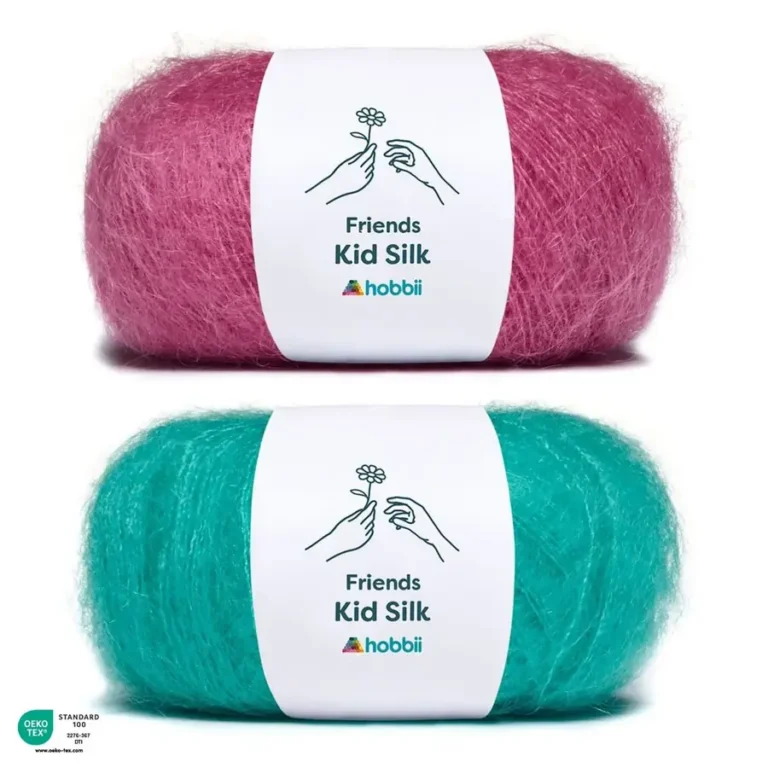
Friends Kid Silk yarn
A lace-weight yarn listed by Hobbii as 72% mohair,25% silk and 3% wool, with 200 m in a 25 g ball. Select and record the required shade on the retailer page.
Retailer profiles: Hobbii
View product detailsContinue reading
Buying guides
Yarn dye lots: order a coherent project quantity
Understand colour numbers, dye lots and project quantities, and know what to ask when ordering yarn for one continuous piece of work.
Read the guide
Buying guides
Buying fabric online: metres, width and continuous cuts
Calculate a fabric order using the selling unit, usable width, pattern layout and whether several units arrive as one continuous piece.
Read the guide
Shop comparisons
Hobbycraft vs The Range: build the same craft project basket
Compare Hobbycraft and The Range by the materials your project needs: usable quantities, compatibility, available shades, seller, delivery and the right return route.
Read the guideEXPLORE THE DIRECTORY
Related shop profiles

Wool Warehouse
Wool Warehouse sells yarn, patterns, needlecraft and related making supplies online. Its range is useful for comparing full project quantities, while dye-lot requests, pack completeness and the current dispatch queue deserve attention before ordering.

LoveCrafts
LoveCrafts combines yarn, knitting and crochet supplies with a large digital-pattern catalogue. It is useful for planning a complete project, provided you distinguish downloadable instructions from physical materials and match quantities to your chosen pattern.
Black Sheep Wools
Black Sheep Wools combines online yarn and needlecraft shopping with its Craft Barn in Culcheth. It suits project-led browsing, with a confirmed collection service and clear reasons to check pack contents before ordering.