
Buying guides
Buying fabric online: metres, width and continuous cuts
Calculate a fabric order using the selling unit, usable width, pattern layout and whether several units arrive as one continuous piece.
Published Information checked
The quantity in a fabric basket can be misleading until you know what one unit means. A listing might sell by the metre, a smaller length or a prepared piece. Before comparing prices, record the selling unit, width and cutting arrangement for the exact fabric, then match those details to your project.
Translate units into the required length
Use the pattern’s requirements for your chosen size and the relevant fabric width. If the shop sells smaller units, calculate how many units produce the length required. The calculation is separate from whether the shop supplies those units continuously. Do not infer a continuous cut from the basket quantity; read the listing or ask the retailer when a single uninterrupted piece is essential.
Treat width as part of the specification
The same garment can require different lengths at different fabric widths. Check the pattern’s layout for a suitable width and consider any directional print, nap or matching requirement it identifies. A narrow piece with an attractive metre price can be less useful than a wider option if the pieces do not fit the required layout. Remnants also need their own exact measurements.
Allow for the preparation instructions
Read the fabric and pattern guidance on preparation, shrinkage and cutting before finalising quantity. If you are unsure how a material behaves, a sample can help assess handle, opacity and colour, though it does not replace the full project layout. Avoid adding a fixed extra allowance to every fabric without understanding the project and the maker’s instructions.
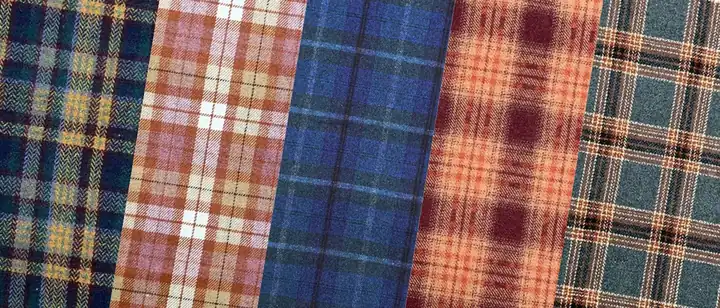
A quantity calculation in selling units
Suppose a hypothetical project requires 2.5 metres of a fabric at the specified width, and one basket unit represents half a metre. The basic quantity is five units. That arithmetic does not establish whether five separate pieces or one continuous length will be supplied. Confirm the cutting arrangement independently and read any project allowance before finalising the order. If another listing uses a different width, return to the layout rather than carrying the same length calculation across unchanged. Keep the numerical requirement and the cutting question as separate checks.
A worked shopping example
A pattern specifies a length at a particular width. One shop sells the fabric in half-metre units and another sells a fixed remnant. Convert both offers into usable dimensions, then check that the remnant is long enough and that multiple units can form one cut. A cheaper total is not useful if a seam-free piece cannot fit on the supplied fabric.
Details to compare side by side
| Detail | What to record | Why it changes the choice |
|---|---|---|
| Selling unit | Length or prepared-piece dimensions | Converts the basket quantity into fabric you can actually use |
| Width | Usable width relevant to the pattern | Changes whether the layout fits and how much length is needed |
| Cut | Continuous length or separate pieces | Matters when a pattern piece must fit without an added seam |
Before placing the order
- Record length per selling unit, usable width and the number of units needed for your selected pattern size.
- Confirm continuous-cut arrangements and any maximum piece length when ordering several units.
- Check directional prints, matching needs and preparation instructions before deciding how much fabric to buy.
Making a project involves a chain of choices. The material, tool and instructions should work together, and the quantity should cover the actual project rather than the smallest advertised pack. Keep an offcut, swatch or label when possible so that you can identify what worked when ordering again. A small trial is often more informative than a larger assortment.
Can I compare fabrics by price per metre alone?
Only after checking that the widths, material requirements and cutting arrangements suit the same project. A useful comparison is the cost of enough usable fabric for the intended layout. Include samples, necessary matching materials and delivery separately, and ask the retailer to clarify a selling unit that is not explicitly described.
Find relevant specialist shops
Use the profiles for Minerva, Abakhan, Sewing Street to reach their official websites and check the exact listing. These are relevant places to explore, rather than a claim that every shop has the same item in stock. Browse the wider arts & crafts directory for more specialists.
Sources and checks
Continue reading
Buying guides
Substituting yarn: compare metres, tension and fibre
Work out a yarn substitution using project metreage, tension, fibre and care information rather than matching ball weight alone.
Read the guideBuying guides
Woven or stretch fabric: match the sewing pattern
Choose sewing fabric by the pattern’s recommended structure, stretch requirements, weight and drape rather than appearance alone.
Read the guideBuying guides
Cross-stitch fabric count: work out the finished size
Compare cross-stitch charts and fabrics using stitch count, the stated fabric count and the allowance needed for your chosen finishing method.
Read the guideEXPLORE THE DIRECTORY
Related shop profiles

Minerva
Minerva focuses on dressmaking fabrics, sewing patterns and haberdashery, with samples and print-on-demand designs. Compare fabric properties and quantities carefully, then check how the longest-handling item affects the dispatch of a mixed order.
Abakhan
Abakhan combines fabrics, yarn, haberdashery and craft supplies with stores in North Wales and north-west England. Compare online listings on their own terms, especially fabric units, remnants and what is actually available through the website.

Sewing Street
Sewing Street connects sewing supplies with live demonstrations and project kits. Its range covers machines, fabrics, quilting, bag making and haberdashery, with warehouse and supplier-direct orders requiring different delivery expectations.