
Buying guides
Soft pastels or oil pastels: buy materials for the right technique
Understand the practical differences between pastel types, suitable supports, set selection and presentation before buying art materials.
Published Information checked
Pastel is not one uniform material category. Soft pastels, oil pastels and pastel pencils can support very different ways of working. Before choosing a colourful boxed set, identify the type used in your class or intended technique and check what paper, storage and presentation it requires.
Read the precise product category
A product photograph may show several pastel types in similar boxes. Look for the full formulation description and the manufacturer’s intended use. Soft pastel and oil pastel should not be assumed to handle, blend or finish in the same way. Pastel pencils may offer a different degree of control again, but their compatibility with other materials still needs checking.
Include a suitable support
Surface texture can be an important part of pastel work. Compare the paper or board recommendations for the selected product, including the usable size and colour. If you follow an exercise that depends on building several layers, choose the support with that process in mind. A cheap general sketchbook is not automatically equivalent to the surface named by the instructor.
Plan transport and presentation
A finished pastel drawing may need protection while being carried and a suitable framing arrangement later. Ask the supplier or framer about the particular medium and surface. Follow instructions for any fixative or finishing product, including its suitability and precautions; do not add a spray merely because it appears beside the pastels in a shop recommendation.
Choose colours for the exercise
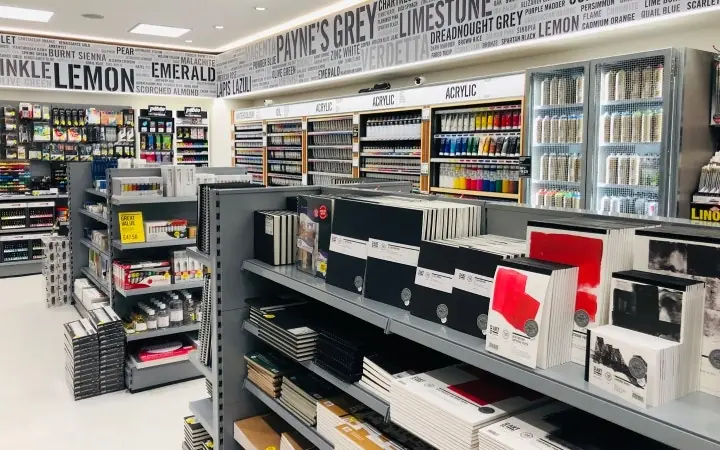
A tutor’s project may require a useful spread of light, middle and dark colours rather than the widest possible collection of bright hues. Read the exercise list and compare the actual set contents. If one required colour is missing, check whether it can be obtained individually in a suitable range. Do not assume the front image shows every stick included. Keep the material category consistent when adding a single colour, and ask the tutor before substituting another pastel type merely because its shade appears close on a screen.
A worked shopping example
A learner chooses a pastel set for a landscape workshop. First confirm the material type and paper named by the tutor. Then compare a smaller set with the essential light, middle and dark colours against a larger general assortment. Add suitable storage for the completed work and ask how it will be transported home. The complete project basket matters more than the number of sticks alone.
Details to compare side by side
| Detail | What to record | Why it changes the choice |
|---|---|---|
| Pastel type | Full category and range | Prevents unlike materials being treated as equivalent |
| Support | Named paper or board and texture | Affects layering and the marks available |
| Presentation | Protection and framing requirements | Helps keep the finished work suitable for transport and display |
Before placing the order
- Confirm soft pastel, oil pastel or pastel pencil before comparing sets, and keep the full range name.
- Match the support to the intended technique, noting surface type, colour and usable dimensions.
- Plan storage and presentation and follow the exact instructions for any proposed finishing product.
Making a project involves a chain of choices. The material, tool and instructions should work together, and the quantity should cover the actual project rather than the smallest advertised pack. Keep an offcut, swatch or label when possible so that you can identify what worked when ordering again. A small trial is often more informative than a larger assortment.
Can I substitute oil pastels in a soft-pastel tutorial?
Do not assume that a change will produce the same process or result. Check with the tutor and read the product guidance. A tutorial can depend on the way a particular material layers, blends or responds to a surface. If you intentionally try another medium, treat it as a new experiment and make a small study first.
Find relevant specialist shops
Use the profiles for Jackson’s Art, Cass Art, GreatArt to reach their official websites and check the exact listing. These are relevant places to explore, rather than a claim that every shop has the same item in stock. Browse the wider arts & crafts directory for more specialists.
Sources and checks
Continue reading
Buying guides
Coloured pencils: dry colour, water-soluble ranges and replacement
Compare coloured pencil types, wet-use instructions, individual colour replacement and useful set sizes for the drawings you actually make.
Read the guideBuying guides
Buying acrylic paint: heavy body, fluid colour and useful sets
Compare acrylic paint consistency, container size and colour selection for brush painting, broad coverage and mixed-media projects.
Read the guideBuying guides
Choosing a sketchbook: paper, binding and working position
Compare sketchbook paper, binding, usable size and portability for drawing at a desk, outdoors or while travelling.
Read the guideEXPLORE THE DIRECTORY
Related shop profiles

Jackson’s Art
Jackson’s Art offers a deep range of painting, drawing and printmaking materials, including its own-brand supplies. It suits artists comparing precise pigments, papers and tools rather than choosing mainly by the size of a starter set.

Cass Art
Cass Art focuses on painting, drawing and other fine-art materials, with an online shop and physical stores. Compare the exact medium, paper and product size, then check the appropriate online or in-store purchase conditions.

GreatArt
GreatArt offers a broad fine-art catalogue and a London art store. It is useful for comparing specialist materials and larger studio items, with warehouse delivery and shop purchases treated as distinct shopping routes.